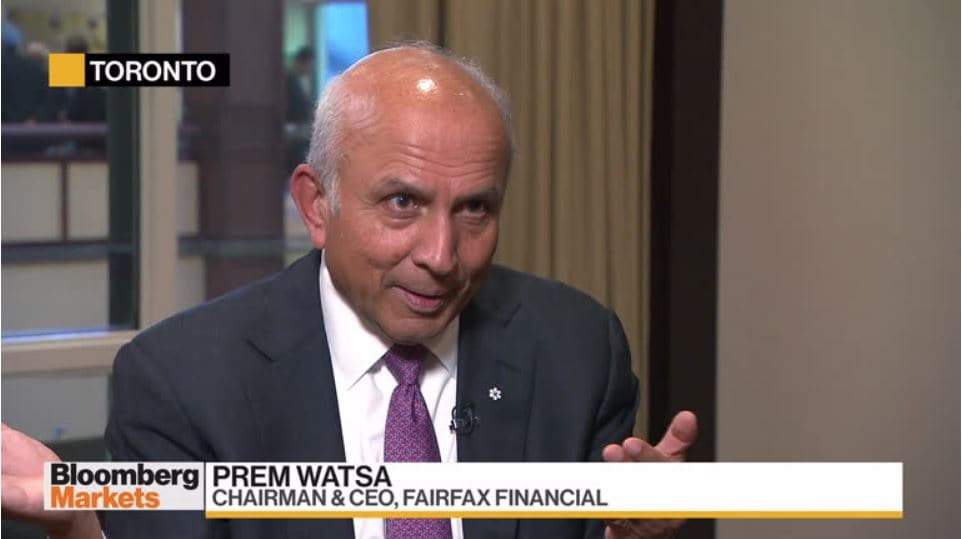
India-born Canada based
billionaire Prem Watsa, CEO of Fairfax Financial
Holdings Ltd., proposes to invest $5 billion in India in the next five years, doubling what he’s put in this far, thus
downplaying worries after India's GDP growth slipped to 6-year low of 5% in
April-June quarter. He also calls India
“the number one country in the
world” to put money.Watsa said that he was interested in participating
in the Indian government’s asset-monetisation and disinvestment plans. He is also planning to finance in oil and gas and said that Fairfax
would look into the internal procedures by providing professional Canadian
companies to be partnered with. Watsa was “was not worried about the growth slowdown
in the GDP of India,” describing its 1.2 billion population as the epicentre of
economic prosperity and advancement. He believes that “its economic growth will
come back to 10%.” He is optimistic about the long-term partnerships with India.
By Xeena Mehta The officials of the United States Trade Representative (USTR) uphold a list of countries that categorises countries as “developing”, “developed”, and “least-developed”. Countries that are classified as “developing” have permissions to export certain goods to the U.S. without being hit by heavy legal tariffs that are bind to be imposed on goods from “developed” countries. The “developing country” tag was originated by U.S. Trade Act of 1974, to aid poor countries develop faster. World Trade Organization also acceded to grant trade benefits to countries that were classified as poor. If noticed we can see that about two-thirds of countries that are members of the WTO classify themselves as “developing” countries and avail fore deals. Any such classification of whether a country is “developing” or not is entirely objective. While the economic progress achieved by India and China have achieved over the last few decades is seen as a valid reason to get rid of their s...

Comments
Post a Comment