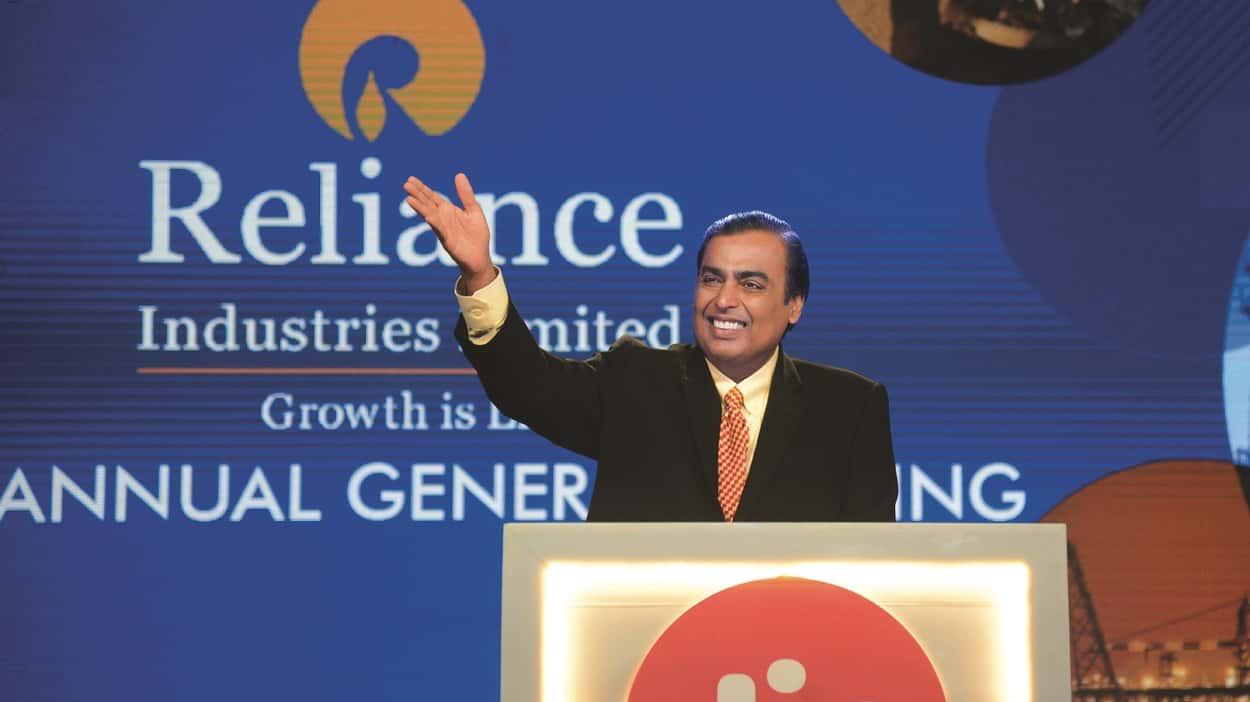
Mukesh Ambani is Distributing 4K Televisions for free


Asia’s richest man is handing out TVs to hook users on movies and entertainment shows via internet. Mukesh Ambani’s fiber-to-the-home (FTTH) service is finally here. After jostling into the wireless phone market through free calls and data for three years, the billionaire is back to rule the market. Jio-Fiber plan rentals starts at ₹699 and goes up to ₹8499. The lowest tariff starts with 100 Mbps speed. Ultra-high speed, free domestic voice calling, conferencing, TV video calling are some of the promises made by the Jio-Fiber Plan.
Airtel, backed by tycoon Sunil Mittal, and billionaire Kumar Mangalam Birla's Idea are also trying to entice users by offering access to TV and movie content in order to cement their position in market after the arrival of Jio-Fiber salvo. They were previously left under maintaining debt due to Ambani's free calls and cheap data service.The market could jump to $5 billion by 2023 from $500 million last year. With boom in Bollywood production houses and streaming services, paying subscribers could rise to as many as 50 million, while users of advertising supporting video-on-demand will reach 600 million.
Wedging its way into a business emblazoned with reputed competitors like Netflix, Amazon.com, Walt Disney co.'s Hot star, Jio would need to go beyond just offering cheaper access via bundled services.

Comments

Popular posts from this blog

Stagflation: A Threat to India

India is entering into the stage of stagflation, just 2 years ago it was expanding at 8% and emerging as a major global player, the situation has come down to this. With higher prices of food, The new citizenship act, and the central bank's target, India is meeting its slowest development in a decade. The inflation in December 2019 increased to 7.35 percent which was the highest since July 2014, which is past the RBI limit of 6%. But what led to this situation? We have had demonetization in 2016, the implementation of GST followed by many other policies but what led to this?  Let's look at some facts. The consumption of volatile oil makes up about 60% of gross domestic product which puts off all the investment plans. Economic growth in the fiscal year through March 31 is set to slow to an estimated 5%. Teresa John, an economist at Nirmal Bang Equities Pvt in Mumbai, quoted “The recovery is likely to be very gradual and a stagflation scenario is likely. ” The government has...

Changing Environment For Local Business In Sri Lanka; Government Initiates The Revolution

Local industries and businesses are the backbone of the economy of any country. Additionally, Sri Lankan Government defines a local company as one with a minimum ownership of 51% of a Sri Lankan. To help these companies grow, the Sri Lankan Finance Ministry has proclaimed a circular enlisting the priorities to the local companies. Moreover, this move from the government may bring some salient alterations in the condition of the local manufacturers. The government has also come with up steps that will augment the local industries across the different domains. These domains include IT sector, construction, etc. The circular, as issued by the government includes relevant documentation regarding sourcing of resources and products. Additionally, sources point towards the fact that the government is hoping to extend support to the domestic sector and help them grow. Besides, the major focus is on the three sectors- IT software and hardware, construction and furniture and allied products. Pos...

Significance of the “Developed Country” Tag for India

By Xeena Mehta The officials of the United States Trade Representative (USTR) uphold a list of countries that categorises countries as “developing”, “developed”, and “least-developed”. Countries that are classified as “developing” have permissions to export certain goods to the U.S. without being hit by heavy legal tariffs that are bind to be imposed on goods from “developed” countries. The “developing country” tag was originated by U.S. Trade Act of 1974, to aid poor countries develop faster. World Trade Organization also acceded to grant trade benefits to countries that were classified as poor. If noticed we can see that about two-thirds of countries that are members of the WTO classify themselves as “developing” countries and avail fore deals. Any such classification of whether a country is “developing” or not is entirely objective. While the economic progress achieved by India and China have achieved over the last few decades is seen as a valid reason to get rid of their s...