
RBI Transfers 1.76 Lakh Crore to the Government


The recessing global economy and India's slip from 5th to 7th fastest growing economy is a major irritant for the Indian economy. The liquidity crisis is deteriorating public sector and needs a push which now seems possible after the Bimal Jalan's committee reports and RBIs compliance to transfer the surplus amount to government. The decision is being criticized by economists, speculated that, Urjit Patel, the former president of RBI, resigned due to pressure from the government.
The package from RBI might turn out to be a big relief as Indian government can channelize this money on:
  • Reviving the Public sectors of India
  • Injecting the much-needed liquidity in market
  • Providing better infrastructure
  • Assisting to recover the automobile sector in India which has been hit the hardest by slowing down of economy
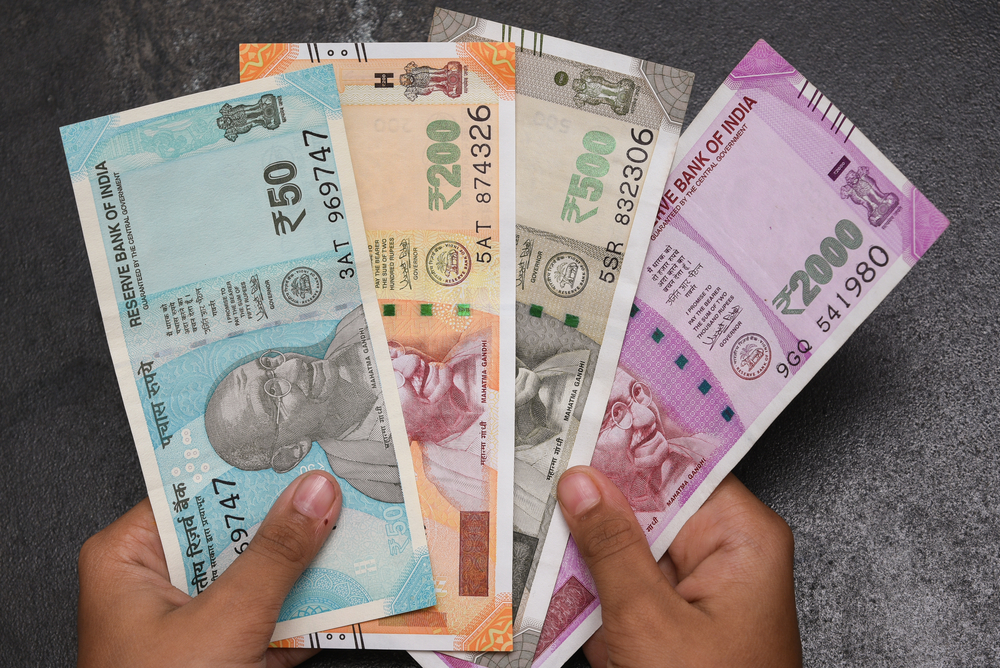
If political clout is left behind and this money is facilitated in a way to regulate the economy and overcome the crisis that we're witnessing, this money transfer from RBI would be much appreciated. However, the other notion suggests that government might put this money into social schemes which might not be as pragmatic as our govt plans to hit the 5 trillion economy tag. The controversies and speculations would be unfolded only as the time passes by. Right now, the economy is struggling to keep up at the pace it used to be and the role of RBIs fund is going to be historical. If done correctly, the economy would once again catch up and will be on the way to grow and prosper.

Comments

Popular posts from this blog

Significance of the “Developed Country” Tag for India

By Xeena Mehta The officials of the United States Trade Representative (USTR) uphold a list of countries that categorises countries as “developing”, “developed”, and “least-developed”. Countries that are classified as “developing” have permissions to export certain goods to the U.S. without being hit by heavy legal tariffs that are bind to be imposed on goods from “developed” countries. The “developing country” tag was originated by U.S. Trade Act of 1974, to aid poor countries develop faster. World Trade Organization also acceded to grant trade benefits to countries that were classified as poor. If noticed we can see that about two-thirds of countries that are members of the WTO classify themselves as “developing” countries and avail fore deals. Any such classification of whether a country is “developing” or not is entirely objective. While the economic progress achieved by India and China have achieved over the last few decades is seen as a valid reason to get rid of their s...

Changing Environment For Local Business In Sri Lanka; Government Initiates The Revolution

Local industries and businesses are the backbone of the economy of any country. Additionally, Sri Lankan Government defines a local company as one with a minimum ownership of 51% of a Sri Lankan. To help these companies grow, the Sri Lankan Finance Ministry has proclaimed a circular enlisting the priorities to the local companies. Moreover, this move from the government may bring some salient alterations in the condition of the local manufacturers. The government has also come with up steps that will augment the local industries across the different domains. These domains include IT sector, construction, etc. The circular, as issued by the government includes relevant documentation regarding sourcing of resources and products. Additionally, sources point towards the fact that the government is hoping to extend support to the domestic sector and help them grow. Besides, the major focus is on the three sectors- IT software and hardware, construction and furniture and allied products. Pos...

SECOND WAVE OF VIRUS LEFT INDIA’S HOSPITALS IN TROUBLE AS SHOTS RUN LOW.

India is facing a health crisis because of the second wave of the virus which is hitting high records. Hospitals around the country are facing a huge shortage of care beds and intensive drugs. From the wealthiest state Maharashtra to the most populated state Utter Pradesh there has been a shortage of hospital care beds and immunization centers which results in turning away people as they are running out of vaccines.  Maharashtra’s health minister Rajesh Tope has announced a strict weekend lockdown in order to control the situation. Mumbai has currently used up all but 3% of its intensive care hospital beds. Mr. Rajesh Tope has warned the state that they have three days’ worth of shots in stock and vaccination centers across the state are being forced to close down. Chief minister Punjab said that the Punjab’s vaccine will last another five days, urging the government to increase the supply. New Delhi -the capital of the country is also facing a lot of troubles due to the virus. At ...