
Puerto Rico’s Debilitating Economy


Puerto Rico is under a huge debt and needs financial aid to overcome it. In the wake of this economic turmoil Aurelius Capital Management, Autonomy Capital and other investors who own $8 billion of Puerto Rico bonds strikes a tentative pact with the island to reduce the nearly $18 billion of debt it owes to the lenders. Even though the creditors are divided in Puerto Rico, it seems that they're coming together to join the tentative agreement and help Puerto Rico pay off its debt. Another group of investors, which includes BlackRock Financial Management Inc., and Brigade Capital Management, have also signed on to the pact, according to the filing. The potential deal would cut Puerto Rico general obligations and debt guaranteed by the commonwealth to $10.7 billion from $17.8 billion, about a 40% reduction. The overall plan slashes debt and non-bond claims to $11 billion from $35 billion, a $24 billion reduction.
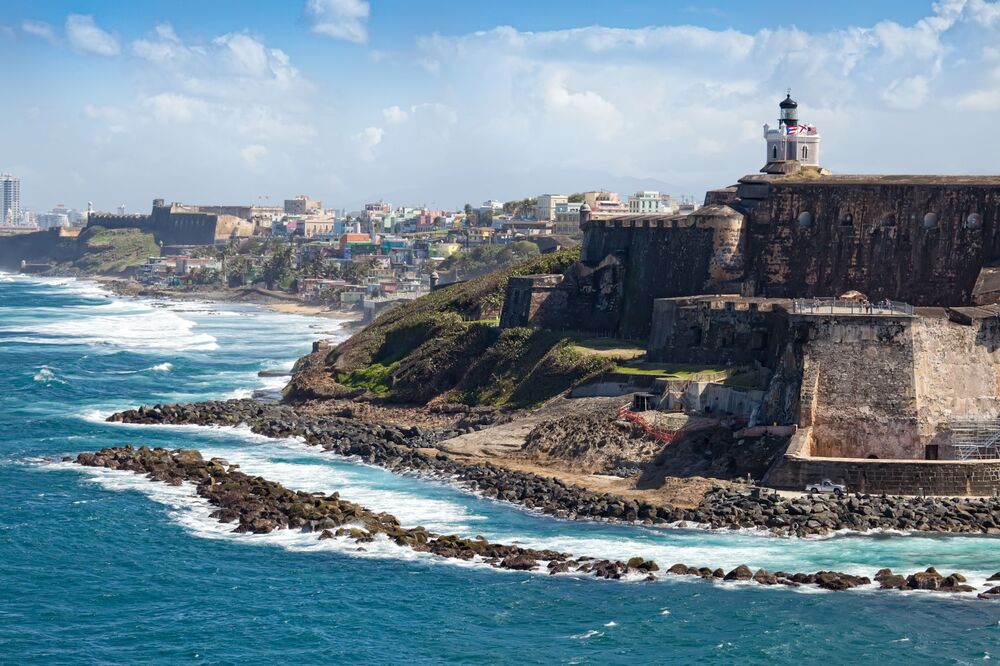
The island that filed bankruptcy on 2nd July, 2017, owes nearly $18 billion of general obligations and commonwealth-backed bonds. The crisis began in 2014 when three major credit agencies downgraded several bond issues by Puerto Rico to "junk status" after the government was unable to demonstrate that it would be able to pay its debt. The downgrading, in turn, prevented the government from selling more bonds in the open market. Unable to obtain the funding to cover its budget imbalance, the government began using its savings to pay its debt while warning that those savings would eventually be exhausted. To prevent such a scenario, the United States Congress enacted a law known as PROMESA, which appointed an oversight board with ultimate control over the Commonwealth's budget. 

However, the law backfired as the government increased taxes and reduced pensions pushing it further into debt.Attracting investment to Puerto Rico and improving its economy depends upon resolving its bankruptcy and easing its debt load. With the plans to resurrect the economy, Puerto Rico needs a solid strategic planning to overcome adversities.

Comments

Popular posts from this blog

Significance of the “Developed Country” Tag for India

By Xeena Mehta The officials of the United States Trade Representative (USTR) uphold a list of countries that categorises countries as “developing”, “developed”, and “least-developed”. Countries that are classified as “developing” have permissions to export certain goods to the U.S. without being hit by heavy legal tariffs that are bind to be imposed on goods from “developed” countries. The “developing country” tag was originated by U.S. Trade Act of 1974, to aid poor countries develop faster. World Trade Organization also acceded to grant trade benefits to countries that were classified as poor. If noticed we can see that about two-thirds of countries that are members of the WTO classify themselves as “developing” countries and avail fore deals. Any such classification of whether a country is “developing” or not is entirely objective. While the economic progress achieved by India and China have achieved over the last few decades is seen as a valid reason to get rid of their s...

Changing Environment For Local Business In Sri Lanka; Government Initiates The Revolution

Local industries and businesses are the backbone of the economy of any country. Additionally, Sri Lankan Government defines a local company as one with a minimum ownership of 51% of a Sri Lankan. To help these companies grow, the Sri Lankan Finance Ministry has proclaimed a circular enlisting the priorities to the local companies. Moreover, this move from the government may bring some salient alterations in the condition of the local manufacturers. The government has also come with up steps that will augment the local industries across the different domains. These domains include IT sector, construction, etc. The circular, as issued by the government includes relevant documentation regarding sourcing of resources and products. Additionally, sources point towards the fact that the government is hoping to extend support to the domestic sector and help them grow. Besides, the major focus is on the three sectors- IT software and hardware, construction and furniture and allied products. Pos...

SECOND WAVE OF VIRUS LEFT INDIA’S HOSPITALS IN TROUBLE AS SHOTS RUN LOW.

India is facing a health crisis because of the second wave of the virus which is hitting high records. Hospitals around the country are facing a huge shortage of care beds and intensive drugs. From the wealthiest state Maharashtra to the most populated state Utter Pradesh there has been a shortage of hospital care beds and immunization centers which results in turning away people as they are running out of vaccines.  Maharashtra’s health minister Rajesh Tope has announced a strict weekend lockdown in order to control the situation. Mumbai has currently used up all but 3% of its intensive care hospital beds. Mr. Rajesh Tope has warned the state that they have three days’ worth of shots in stock and vaccination centers across the state are being forced to close down. Chief minister Punjab said that the Punjab’s vaccine will last another five days, urging the government to increase the supply. New Delhi -the capital of the country is also facing a lot of troubles due to the virus. At ...